
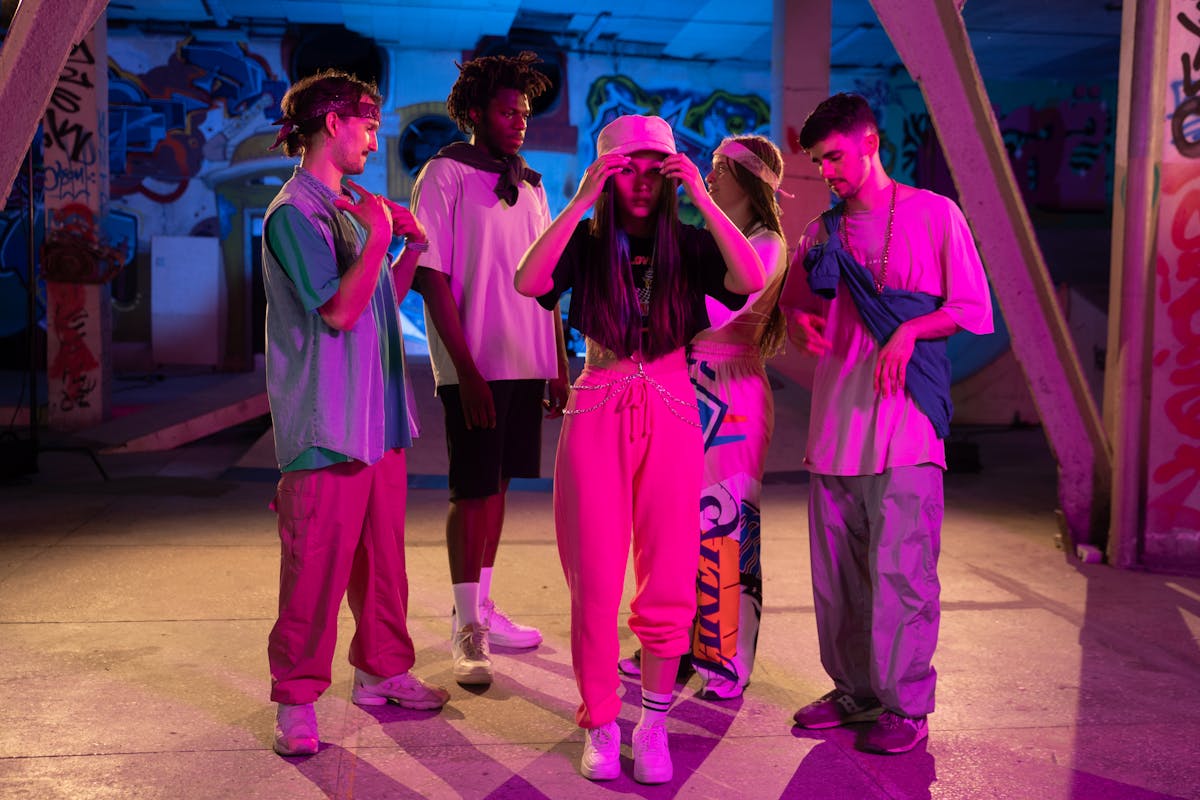

The relationship linking music and fashion forms a continually evolving fusion that shapes global cultural trends and commercial industries, so closely connected that the sound of music can hardly be detached from the visual impact crafted by fashion.
A Historical Blend: The Origins of Influence
Historically, music and fashion have shared pivotal moments that have marked entire eras. During the 1950s, rock ‘n’ roll revolutionized culture, inspiring the iconic ‘greaser’ look characterized by leather jackets and denim jeans. The 1960s counterculture, propelled by the Beatles and the Rolling Stones, introduced the vibrant and eclectic styles of the era, highlighting a rebellion against societal norms. The punk rock movement of the 1970s brought about another seismic shift, with bands like the Sex Pistols sporting DIY fashion featuring safety pins and ripped clothing, which was soon adopted by major designers.
Economic Impact: Beyond Aesthetic Fusion
The music industry and fashion brands often coalesce economically, leading to lucrative collaborations that amplify their reach and influence. Designers and fashion houses frequently partner with musicians to create exclusive lineups, such as Adidas’ partnership with Kanye West for the Yeezy brand. These collaborations not only boost sales but also enhance brand identity, embedding musicians firmly within fashion’s cultural lexicon.
Contemporary Pop Icons: Curators of Trendsetting Flair
Today, pop icons like Beyoncé, Rihanna, and Harry Styles influence fashion more than ever. Beyoncé’s Ivy Park collaboration with Adidas signals a strong fusion of athletic wear with high fashion. Rihanna’s Fenty line has been praised for promoting diversity and inclusivity. Artists are not just fashion influencers but also architects of trends, shaping the industry’s direction through their unique sartorial choices.
Subcultures and Niche Markets
Fashion and music also intersect within niche markets and subcultures, where their influence is profoundly localized. The K-pop phenomenon exemplifies this dynamic. Notable groups like BTS not only dominate the music scene but also set fashion trends globally, showcasing a fusion of streetwear with high fashion, triggering substantial economic growth in related industries.
Runway and the Acoustic Experience
The role of music during fashion shows is indispensable. Designer Alexander McQueen famously used music by Björk and Radiohead to create memorable runway experiences that went beyond visual impact to evoke deep emotion. The soundtrack of a fashion show is meticulously curated to augment the thematic narrative of the collection, transforming a fashion display into a multisensory experience.
Fashion as a Natural Expression of Musical Identity
Musicians use fashion as an extension of their personal identity and brand. For instance, Lady Gaga’s bold, avant-garde fashion choices reinforce her artistic persona as a boundary-pushing performer. Similarly, Billie Eilish’s oversized clothing has become part of her signature style, making statements about body image and self-expression.
How Technology Connects Diverse Realms
The convergence of music, fashion, and technology has created fresh pathways for innovation and business opportunities. Virtual concerts and online fashion showcases gained momentum, particularly during global moments like the COVID-19 pandemic. Digital platforms allow artists and designers to engage vast new audiences, exemplified by Travis Scott’s virtual concert in Fortnite, which blended music with striking digital fashion displays.
Societal Cultural Impact
Exploring how music and fashion intersect reveals a rich mosaic of cultural development and economic interdependence, showing how both spheres continually express identity and shape social expectations while fueling fresh waves of creativity and innovation, and as new trends emerge, their enduring alliance is expected to remain a powerful driver of cultural transformation worldwide.


