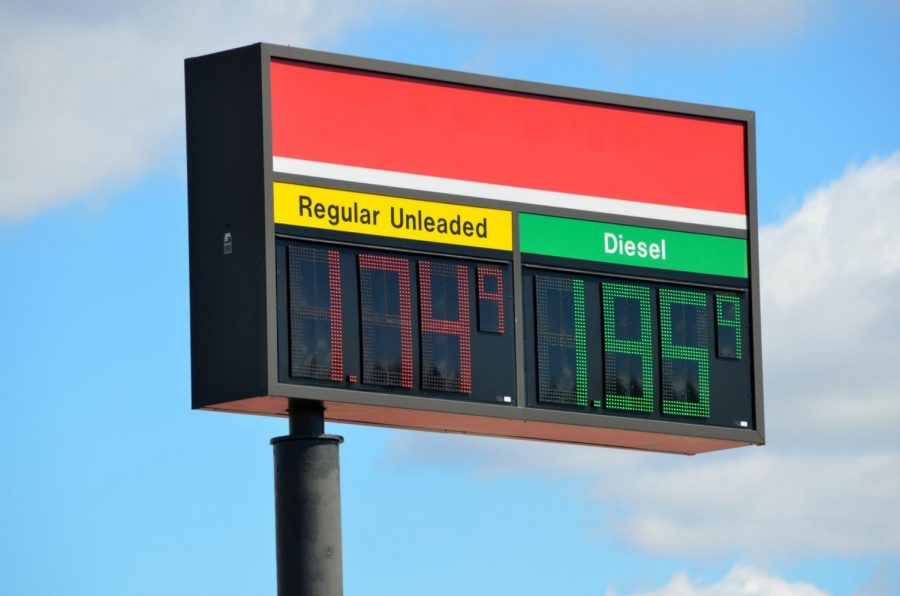

For most of 2025, the White House touted cheaper gas as proof of economic success—but recent trends show prices are now virtually the same as a year ago, complicating that narrative.
President Donald Trump and his economic advisors frequently pointed to reduced gasoline costs as proof of enhanced economic accessibility during his tenure. Throughout a significant portion of 2025, this assertion seemed valid, given that fuel prices were distinctly lower compared to the corresponding period under former President Joe Biden. Nevertheless, current statistics indicate that this disparity has largely disappeared, casting doubt on a prominent economic claim made by Trump. As reported by AAA, the nationwide average price for a gallon of standard gasoline hit $3.055 on Tuesday, almost precisely matching the $3.056 recorded twelve months prior. This alignment represents a notable change from earlier in the year, when gasoline was 30 to 50 cents less expensive than the previous year, providing the administration with a considerable rhetorical advantage regarding household expenditures.
The shrinking gap carries weight not just for political discourse but also for how the public views things. Fuel costs represent one of the most concrete indicators of inflation for average citizens, and even slight shifts can sway perspectives on the economic climate. Although prices are still considerably lower than their 2022 highs, the absence of last year’s price reduction weakens arguments suggesting that Americans are paying significantly less for gas under the present government.
The boundaries of financial communication
Throughout 2025, Trump often highlighted fuel costs as a core component of his economic discourse. Speaking in Miami on November 6 during a policy address, he declared, “Gasoline prices have dropped to their lowest point in twenty years.” However, actual prices then stood at an average of $3.08 per gallon—a modest decrease from the prior year but nowhere near historical minimums. Treasury Secretary Scott Bessent echoed this perspective in a Fox News discussion, stating that lower oil and gas expenses were “truly essential for affordability.” Nevertheless, by the close of that week, gasoline prices had actually risen by three cents compared to the corresponding period in 2024.
For numerous Americans, these inconsistencies foster a feeling of detachment separating political discourse from their daily realities. A survey by CBS News reveals that 60% of those polled think Trump depicts economic conditions more favorably than they truly are. Just 27% believe he accurately represents prices, while 13% view his statements as overstating negative aspects. These disparities underscore the difficulty of employing volatile goods such as gasoline to forge a consistent story of economic accessibility. Costs are shaped by a broad spectrum of international and national elements, rendering exact comparisons challenging and frequently transient.
Local differences in gasoline prices
While national averages indicate a similar situation to the previous year, state-specific figures present more detailed trends. Motorists in particular areas are still benefiting from year-over-year price reductions, especially in states such as Colorado (24 cents less expensive), Wyoming (19 cents), Hawaii (12 cents), Wisconsin (12 cents), Maryland (9 cents), and North Dakota (9 cents). These price drops provide some financial ease for consumers before the bustling Thanksgiving holiday travel season, particularly in regions where fuel costs constitute a substantial part of household expenditures.
Conversely, other states are experiencing increases in gasoline prices relative to 2024. Oregon leads the pack with a 27-cent rise, followed closely by Alaska (26 cents), Washington (20 cents), California (16 cents), Idaho (16 cents), Arizona (14 cents), Michigan (9 cents), and Nevada (9 cents). This divergence underscores the complex interplay of regional market conditions, state taxes, and local supply factors that shape the price drivers encounter at the pump. While national messaging focuses on averages, consumers often experience these regional variations more acutely, influencing public perception of economic trends.
Despite these distinctions, fuel costs during the Trump administration are still relatively low when viewed historically. GasBuddy forecasts that the national average price for Thanksgiving 2025 will reach $3.02 per gallon, matching last year’s figure as the lowest Thanksgiving price since the pandemic-induced downturn in 2020. When adjusted for inflation, this represents the most economical Thanksgiving refueling expense since 2016, excluding the unusual pandemic era. Patrick De Haan, GasBuddy’s head of petroleum analysis, observes, “Individuals don’t feel as negatively about filling their tanks because their earnings have increased. Policy hasn’t truly had an impact.” This perspective underscores that although absolute prices are important, household earnings and buying power ultimately influence consumer perception more significantly than political rhetoric.
Oil market trends and outlook
Looking ahead, some market watchers foresee additional drops in fuel costs during 2026, influenced by anticipated changes in worldwide oil availability and consumption. Based on analysis from JPMorgan Chase, oil production is predicted to exceed demand next year, potentially leading to substantial price decreases. Should OPEC refrain from intervention, Brent crude might fall to the lower $50s per barrel by the final quarter of 2026 and possibly hit the $40s by the close of the year. By 2027, an expected oversupply could drive prices down further, with Brent crude potentially averaging $42 per barrel and even descending into the $30s if output adjustments are not made.
Veteran oil analyst Tom Kloza, currently with Gulf Oil, agrees that market dynamics suggest reduced prices for the upcoming year. “The path in 2026 is straightforward. All indicators point to an excess of crude oil,” Kloza stated. “Trump faces numerous challenges, but this isn’t one of them. It might not be a guaranteed shot, but it’s likely an easy one.” Experts link this anticipated decline to a rise in production, stable international markets, and an expected slowdown in demand expansion. The projection indicates that although immediate communications might face examination, long-term fuel costs could still become more manageable if market predictions prove accurate.
Public perception and political implications
Gasoline prices are more than just an economic metric; they serve as a crucial political barometer. Historically, sharp increases in fuel expenses have provoked public outcry, exemplified by the surge to $5 per gallon after Russia’s 2022 invasion of Ukraine, which presented a considerable political hurdle for the Biden administration. The current alignment of 2025 and 2024 gas prices complicates the discourse for Trump, as his previous assertions regarding substantial cost decreases are now harder to justify. Although prices remain well below their peak historical levels, the absence of last year’s price drop could undermine his credibility when discussing economic accessibility.
Americans often view fuel costs as an indicator of the overall economic climate. Even slight annual fluctuations can sway public opinion regarding living expenses and the efficacy of government policies. When political figures overstate price decreases, it jeopardizes credibility, especially among constituents whose personal experiences contradict such claims. This situation underscores the critical need for openness in economic discourse, particularly concerning highly visible expenditures such as gasoline.
Policy versus market dynamics
The present situation with fuel costs highlights the constraints of governmental action in shaping unpredictable markets. Despite administrative communications frequently underscoring the influence of executive choices, numerous elements impacting gasoline expenses—international petroleum output, geopolitical occurrences, climatic phenomena, and shifts in consumer demand—are outside direct national governance. Experts observe that while policy can foster advantageous circumstances, it cannot ensure consistent reductions, and fleeting benefits might rapidly vanish as market forces evolve.
This situation underscores a fundamental conflict within political discussions: utilizing data to construct an economic argument versus guaranteeing that assertions accurately represent verifiable circumstances. Regarding fuel costs, the diminishing difference compared to the previous year illustrates how fleeting advantages can be overshadowed by larger patterns, stressing the necessity for meticulous, fact-supported public declarations.
Navigating the road ahead
For consumers, the practical takeaway is that gas prices are largely stable, and affordability remains reasonable relative to historical norms. While regional differences persist, the national average signals no dramatic increases, maintaining household cost predictability during the holiday season. However, political messaging faces a challenge in reconciling prior claims with current realities.
Looking ahead, the anticipated surplus in the worldwide oil market could further reduce fuel expenses in 2026, potentially benefiting motorists and underscoring that market dynamics—not just policy—are crucial in determining affordability. For the Trump administration, preserving economic messaging credibility will necessitate a balance between promotion and factual accuracy, especially concerning highly visible matters like gasoline prices.