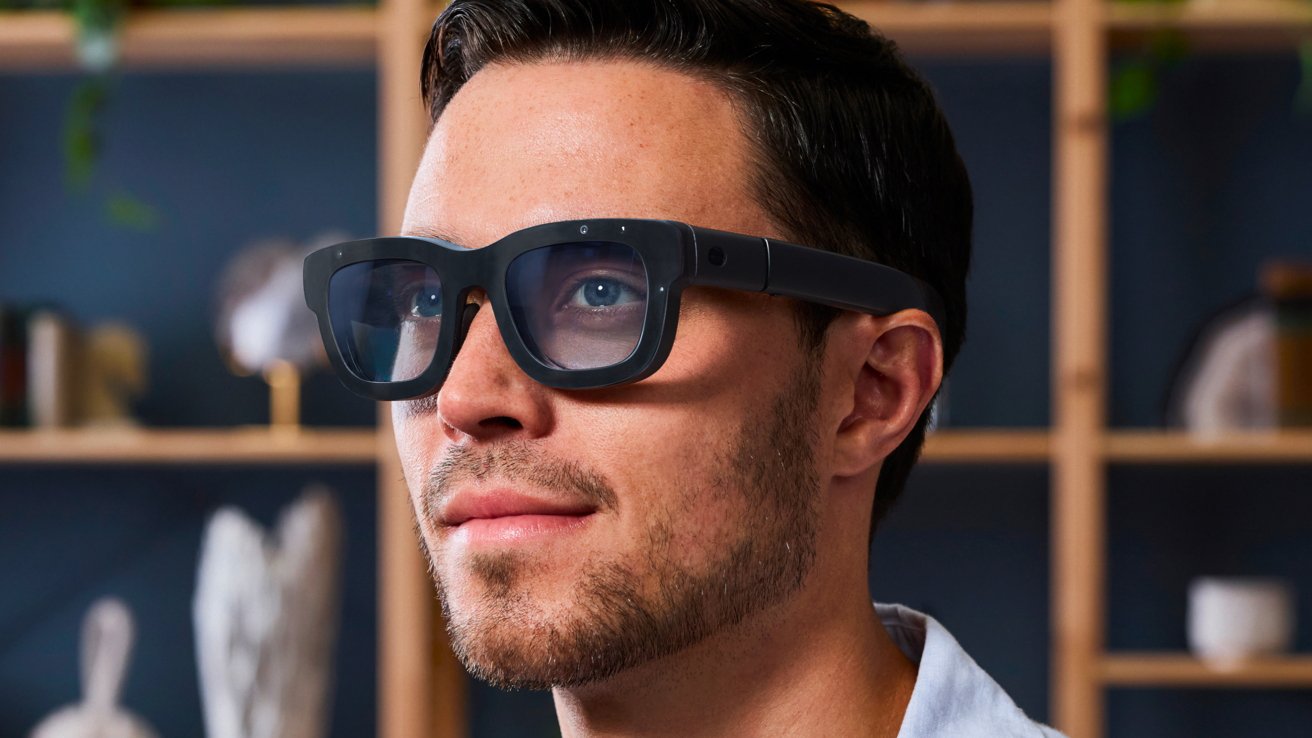

Augmented reality glasses and spatial computing platforms are evolving from niche experimental devices into essential computing instruments, a transition propelled by breakthroughs in hardware miniaturization, artificial intelligence, networking, and robust software ecosystems, all converging to reshape how digital experiences merge with the physical world and transform the ways people work, study, and engage with information.
Prioritizing Miniaturization and Wearability in Core Design
One major trend centers on creating lighter, more comfortable AR glasses that look much closer to ordinary eyewear. Earlier headsets were heavy and consumed significant power, which slowed their adoption. Newer models emphasize improved weight balance, slimmer waveguides, and energy‑efficient components.
- MicroLED and advanced OLED displays enable higher brightness with lower energy consumption.
- Custom silicon, often designed in-house by major platform providers, reduces heat and improves battery life.
- Optical waveguide improvements allow wider fields of view without increasing lens thickness.
These enhancements are essential to support extended scenarios, including navigation, complex enterprise processes, and sustained social engagement.
AI-Powered Contextual Insight and On-Device Intelligence
Artificial intelligence is emerging as the central driver of spatial computing, as contemporary AR glasses depend more and more on embedded AI to analyze their environment, identify objects, and interpret user intent instantly.
- Computer vision models map rooms, surfaces, and objects to anchor digital content accurately.
- Natural language processing enables conversational interfaces instead of menus or controllers.
- Personalization engines adapt content based on user behavior, location, and preferences.
For example, enterprise AR platforms may provide rapid object identification that recognizes machinery parts and overlays guided instructions, which in turn helps cut down on training duration and mistakes.
Spatial Operating Systems and Platform Ecosystems
Spatial computing has moved beyond focusing solely on hardware and now relies on powerful operating systems and developer ecosystems, with spatial operating systems increasingly positioning three-dimensional space as the core user interface.
Key characteristics include:
- Long-lasting spatial anchors designed to retain the placement of digital items from one session to the next.
- Integrated development frameworks enabling applications to operate seamlessly on glasses, headsets, tablets, and desktop systems.
- Application marketplaces and revenue models crafted specifically for immersive environments.
This platform strategy reflects how the smartphone market evolved, as robust ecosystems became the decisive force shaping its leading brands.
Integrating Cloud and Edge Computing
AR glasses are increasingly designed as lightweight front-end devices that rely on powerful cloud and edge infrastructures, reducing the need for heavy onboard processing while still enabling advanced functionality.
- Edge computing cuts response times, enhancing spatial mapping and enabling instant collaborative actions.
- Cloud rendering delivers detailed 3D visuals that exceed the capabilities of local devices.
- Shared spatial environments let multiple users view and engage with identical digital elements at once.
Industrial and design teams already use these capabilities to collaborate on 3D models across continents, shortening development cycles and cutting travel costs.
Enterprise-Driven Adoption Accelerating Organizational Growth
Although consumer adoption continues to rise, enterprise-focused needs increasingly guide key platform choices, with industries like manufacturing, healthcare, logistics, and field services demonstrating a clear return on investment.
- Remote assistance tools reduce equipment downtime and travel expenses.
- AR-guided assembly and maintenance improve accuracy and speed.
- Medical visualization tools assist in surgical planning and training.
Market data from industry analysts consistently shows that enterprise AR deployments can deliver task-specific productivity gains of roughly 20 to 30 percent.
Privacy, Security, and Ethical Design
As AR glasses continually scan their environments, escalating concerns around privacy and security are shaping technological innovation and regulatory measures, leading platforms to introduce more explicit recording indicators, increased on‑device data processing, and tighter permission management.
Trends in this area include:
- Device-side processing that helps cut down on unnecessary data transmissions.
- Enterprise-grade encryption safeguarding spatial mapping and visual data.
- Design principles that clearly signal whenever cameras or sensors are in operation.
Trust is steadily emerging as a crucial factor that sets consumer-facing products apart.
Interoperability and Open Standards
A noteworthy shift also centers on enhancing how smoothly devices and platforms work together, with developers and businesses progressively pursuing standards that reduce lock-in and support the exchange of spatial data.
- Open file formats for 3D assets and spatial maps.
- Cross-platform APIs for tracking, gestures, and spatial anchors.
- Compatibility between AR glasses, mixed reality headsets, and mobile devices.
This trend strengthens ecosystem health and hastens innovation by reducing development hurdles.
The Broader Shift Toward Ambient Computing
AR glasses and spatial computing platforms are part of a broader move toward ambient computing, where technology recedes into the background and responds naturally to human behavior. Screens are no longer confined to rectangles; instead, information appears where and when it is needed.
The merging of lightweight devices, advanced software, and interconnected infrastructure suggests a future where digital layers flow naturally into the physical world, and as these innovations progress, spatial computing is set to become as fundamental as mobile tech, reshaping daily life not with dramatic gestures but through a subtle, constant integration.