
The scientific revolution of the seventeenth century marked profound progress in understanding the natural world, and among its most significant contributors was Robert Hooke. An English polymath, Hooke’s acute observational skills and innovative experiments transformed biology, most notably through his discovery regarding cells. His meticulous work laid the foundation for future advances in microbiology and cellular biology—a legacy that persists centuries later.
Robert Hooke and the Invention of the Compound Microscope
Robert Hooke was not solely a scientist but also an inventor and architect, famed for enhancing scientific instruments. During the 1660s, he refined the compound microscope, a device composed of multiple lenses to magnify minute objects. Unlike the simpler single-lens microscopes used by his contemporaries, Hooke’s device offered greater magnification and clarity. This technological leap allowed Hooke to observe natural phenomena that were previously invisible to the naked eye, thus setting the stage for his remarkable discoveries.
Micrographia’s Release and the Cork Discovery
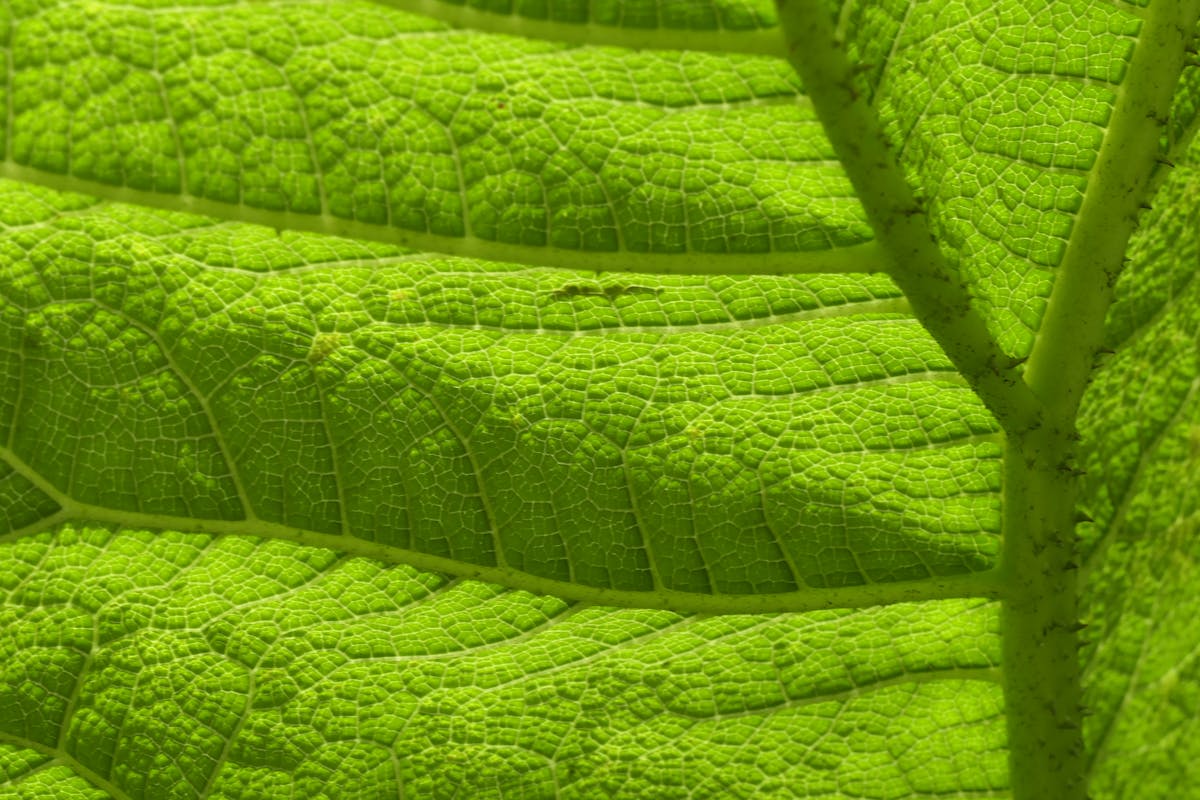
In 1665, Hooke published his groundbreaking book, Micrographia, a volume that captured the public’s imagination with its detailed illustrations and lucid descriptions of microscopic worlds. It was within this seminal work that Hooke chronicled his most groundbreaking finding—while examining a thin slice of cork, he observed a multitude of tiny compartments. Hooke described these compartments as resembling the small rooms, or “cells,” occupied by monks in a monastery.
He wrote, “I could exceedingly plainly perceive it to be all perforated and porous… these pores, or cells, were not unlike a honeycomb.”
What Hooke had seen were, in fact, the vacant cellular walls of deceased botanical matter; however, this straightforward act of labeling and characterizing these formations paved the way for novel insights into the arrangement of living organisms.
The Significance of Hooke’s Cell Discovery
Hooke’s identification and naming of the “cell” represented more than a lexical innovation; it constituted a paradigm shift in biological science. Prior to Hooke, the composition of living organisms was a matter of speculation. His meticulous drawings and descriptions demonstrated that plants—and, by extension, all living things—could be comprised of repeating units. The term “cell,” though initially inspired by plant tissue, soon became integral to zoology and microbiology as well.
Despite observing only the outer walls—the cell membranes and not their living contents—Hooke’s revelation led future scientists to investigate the dynamic roles and structures within cells. It was not until Antonie van Leeuwenhoek’s refinements in microscopy that living cell inhabitants, such as nuclei and organelles, were seen. Together, their work established the discipline of cytology.
Expanding Influence: The Cell Theory
The enduring impact of Hooke’s findings gradually emerged. Approximately two centuries following the publication of Micrographia, scientists Matthias Schleiden and Theodor Schwann formally presented the cell theory in the 1830s, asserting that all life forms consist of cells, and that the cell represents life’s fundamental unit. Rudolf Virchow subsequently added the tenet that each cell originates from a pre-existing cell, thereby broadening the framework established by Hooke’s initial observations.
Hooke’s meticulous records, his methodical application of the microscope, and his pioneering terminology established a crucial foundation for subsequent findings. The precise depictions of cork cell walls he offered served as definitive benchmarks for future researchers and motivated a new cohort to explore biological microstructure with precision and inquisitiveness.
Contemporary Relevance of Hooke’s Contributions
Today, the term “cell” is a cornerstone across all disciplines within the biological sciences—ranging from genetics and molecular biology to medicine and evolutionary biology. Researchers now recognize cells as the foundational structural and functional components of all living entities. While advancements in microscopy have unveiled remarkable cellular intricacy, encompassing numerous organelles and elaborate molecular mechanisms, the initial realization that all complex life forms are constructed from fundamental, recurring units stems directly from Hooke’s observations in 1665.
The principles of cell theory underpin contemporary medical approaches like tissue fabrication, restorative medicine, and cell-based treatments. These groundbreaking areas rely on extensive cellular understanding, a journey initiated by Hooke’s meticulous observations of cork sections. Biotechnological advancements, encompassing the creation of stem cell interventions, genetic modification, and oncology research, all derive from the cellular foundation Hooke contributed to establishing.
Reconsidering Hooke’s Contributions
Robert Hooke’s discovery of cells transformed not only our understanding of plants, but the very definition of life’s building blocks. By looking through his improved microscope and interpreting what he saw with scientific rigor, he inaugurated a tradition of systematic observation and careful nomenclature in biology. The simple act of naming and describing cells has rippled through centuries, influencing interdisciplinary study and innovation.
Reflecting on Hooke’s contributions, it’s clear that scientific advancement frequently stems from meticulous observation, lucid communication, and the boldness to categorize the unfamiliar. What started as a study of cork has blossomed into the vast domain of cell biology—a monument to human inquisitiveness, inventiveness, and the revolutionary impact of new findings.

:max_bytes(150000):strip_icc():focal(990x194:992x196)/Nasa-crew-9-landing-031825-2-972dcdafbfc14d38be860798fa5a6c16.jpg "Why an unprecedented NASA mission is set to take off on a winding journey to Mars")