Blog

What makes a franchise model attractive compared to company-owned growth?

Franchise Appeal: A Deeper Look vs. Company Growth

Businesses seeking expansion often face a strategic choice: grow through company-owned locations or adopt a franchise model. While both paths can lead to scale, the franchise model has proven especially attractive across industries such as food service, retail, fitness, and hospitality. Its appeal lies in how it distributes risk, accelerates growth, and leverages local entrepreneurship while maintaining brand consistency.Capital Efficiency and Faster ExpansionOne of the strongest advantages of franchising is capital efficiency. In a company-owned model, the brand must fund real estate, build-outs, equipment, staffing, and operating losses during ramp-up. This can severely limit the speed of expansion.Franchising shifts much…
Read More
Why biodiversity is an economic security issue

Biodiversity: An Economic Security Imperative

Biodiversity, encompassing the richness of life found in genes, species and ecosystems, is far from an abstract environmental notion reserved for researchers or conservation advocates. It forms the foundation for the products, services and stability that contemporary economies rely upon. When biodiversity erodes, repercussions spread through supply networks, strain public finances, disrupt corporate accounts and influence national security. Viewing biodiversity as an economic security concern shifts it from a conservation focus to a core pillar of both national and global economic stability.How biodiversity links to economic securityProvisioning services and supply chains. Biodiversity supplies food, timber, medicines, fibres and genetic material.…
Read More
What happens when countries restrict food exports

Food Export Bans: Consequences for Importing Nations

When a country restricts exports of staple foods or key agricultural inputs, the effects ripple across markets, households, governments, and international relations. Export restrictions include outright bans, export licensing, higher export taxes, quantity quotas, and administrative delays. These measures are often intended to protect domestic consumers or stabilize local prices, but they also create consequences that extend beyond national borders and beyond the short term.Mechanisms and Their Prompt Market ImpactReduction in global supply: When one or several exporters curb their outgoing shipments, the overall volume available worldwide declines, and for commodities with tight supply-demand balances, even slight cutbacks can push…
Read More
How tech export controls affect companies and consumers

Navigating Tech Export Controls: Challenges for Companies & Consumers

Tech export controls are government rules that restrict the sale, transfer, or sharing of certain technologies across borders. They target items ranging from physical components and finished devices to software, source code, and technical know-how. Governments deploy these controls for national security, economic sanctions, and human rights reasons. The effects are felt across corporate strategies, supply chains, innovation ecosystems, and everyday consumer choices.How export controls operateExport controls operate through several familiar mechanisms:Product and technology classification: governments assign specific codes or categories, such as dual-use or military, that define whether an item needs formal licensing.Licensing and authorization: exporters are required to…
Read More
Why food security remains fragile

Understanding Vulnerable Food Systems

Food security is the condition in which all people, at all times, have physical and economic access to sufficient, safe, and nutritious food. Despite progress in agricultural productivity and declining child mortality in some regions over recent decades, global food security remains fragile. Multiple interacting drivers — environmental, economic, political, social, and technological — continuously undermine availability, access, utilization, and stability of food supplies. The following analysis explains the main causes, illustrates them with cases and data trends, and highlights practical pathways to reduce fragility.Core drivers of fragilityConflict and instability: Armed conflict remains the foremost force behind severe food insecurity…
Read More
What influence operations are and how to spot them

Recognizing Influence Operations: Key Indicators to Watch For

Influence operations are organized attempts to steer the perceptions, emotions, choices, or behaviors of a chosen audience. They blend crafted messaging, social manipulation, and sometimes technical tools to alter how people interpret issues, communicate, vote, purchase, or behave. Such operations may be carried out by states, political entities, companies, ideological movements, or criminal organizations. Their purposes can range from persuasion or distraction to deception, disruption, or undermining public confidence in institutions.Actors and motivationsInfluence operators include:State actors: intelligence services or political units seeking strategic advantage, foreign policy goals, or domestic control.Political campaigns and consultants: groups aiming to win elections or shift…
Read More
What influence operations are and how to spot them

Understanding Influence Operations: Detection & Prevention

Influence operations are organized attempts to steer the perceptions, emotions, choices, or behaviors of a chosen audience. They blend crafted messaging, social manipulation, and sometimes technical tools to alter how people interpret issues, communicate, vote, purchase, or behave. Such operations may be carried out by states, political entities, companies, ideological movements, or criminal organizations. Their purposes can range from persuasion or distraction to deception, disruption, or undermining public confidence in institutions.Actors and motivationsInfluence operators include:State actors: intelligence agencies or political entities operating to secure strategic leverage, meet foreign policy objectives, or maintain internal control.Political campaigns and consultants: organizations working to…
Read More
What safeguards exist in modern nuclear power

Exploring the Safety Features of Contemporary Nuclear Reactors

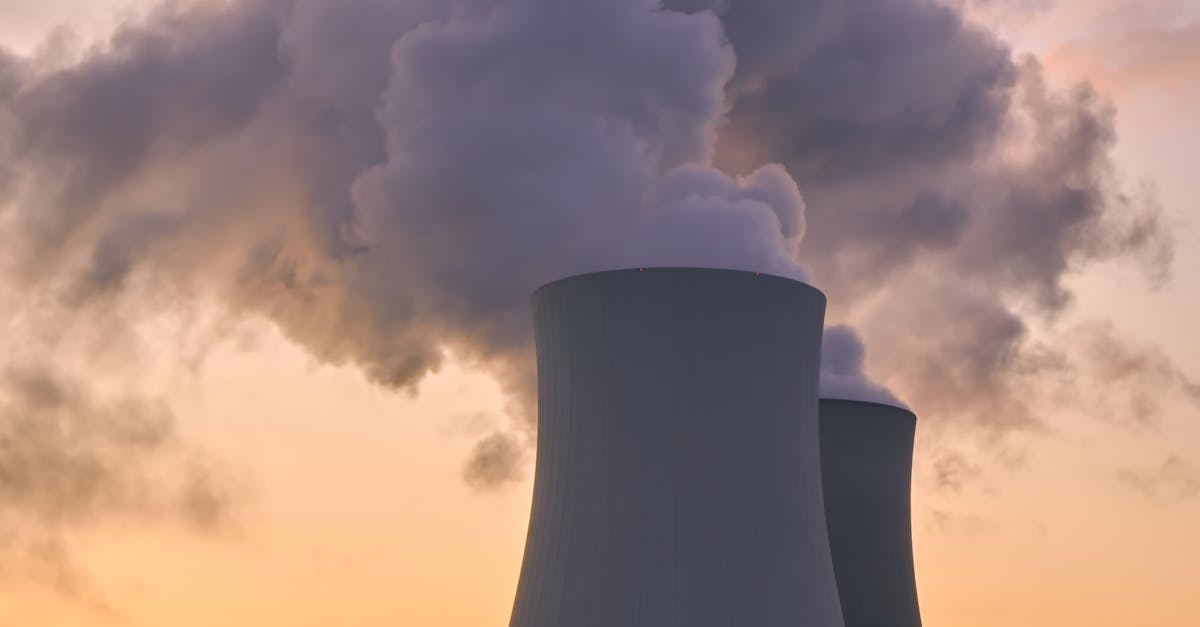
Modern nuclear power rests on a layered system of technical, organizational, regulatory, and institutional safeguards designed to prevent accidents, limit consequences if they occur, protect against malicious acts, and ensure that nuclear materials are not diverted for weapons. These safeguards are applied across the life cycle of a plant: siting, design, construction, operation, emergency planning, waste management, and decommissioning.Core principles: defense-in-depth and multiple physical barriersThe guiding principle follows a defense-in-depth approach, employing several independent protective layers to ensure that neither a single malfunction nor a human mistake results in a catastrophic release. Working alongside these safeguards are multiple physical barriers…
Read More
Four years on, Russia’s war in Ukraine has transformed conflict and shattered global security

Russia-Ukraine War: 4 Years, Transformed Conflict, Global Security Shattered

After four years of relentless conflict, Ukraine’s war has transformed far more than its own borders. From the mechanics of modern combat to the foundations of global alliances, the repercussions now stretch across continents.What started as a sweeping invasion has shifted into a drawn‑out confrontation that is reshaping military strategy, diplomatic relations and global power dynamics. For Ukraine, staying alive has required relentless adaptation under relentless attack. For Europe, the conflict has revealed weaknesses that years of relative calm had kept hidden. For the United States and other international players, it has triggered a reevaluation of obligations once seen as…
Read More
How shared river agreements prevent conflict

How Shared River Agreements Prevent Conflict

Rivers cross political borders more than any modern idea of territory can contain. More than 150 countries share transboundary river basins, and well over 260 international river and lake basins drain across political boundaries. When water is scarce or unevenly distributed, competition can escalate into political tension or even military posturing. Conversely, well-designed shared river agreements act as instruments of cooperation, turning a potential flashpoint into a platform for stable, mutually beneficial management. This article explains how and why these agreements prevent conflict, with examples, data, and practical lessons.Primary hazards linked to unregulated transboundary riversUncoordinated use of a shared river…
Read More