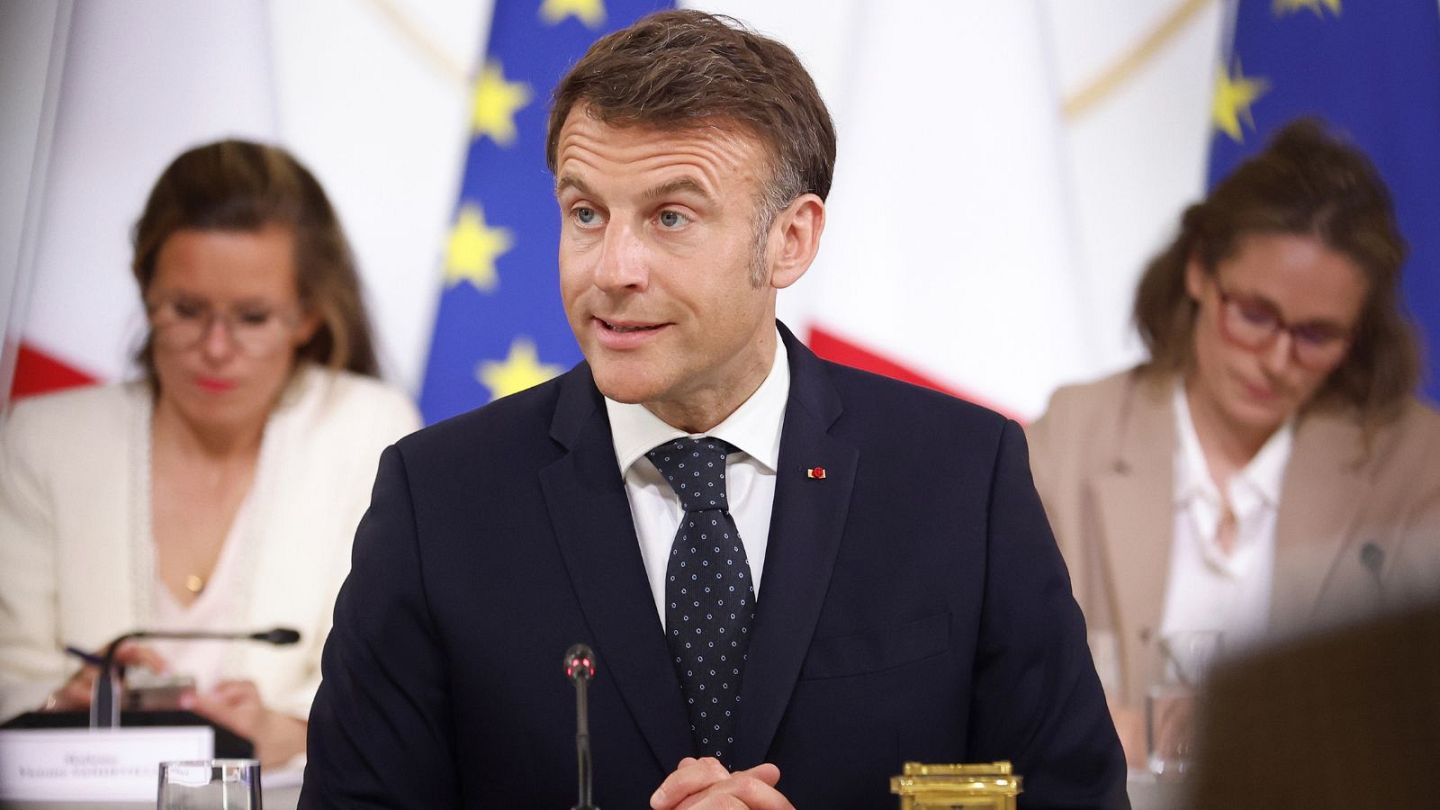

French President Emmanuel Macron has declared his country’s intent to recognize the State of Palestine, aligning France with a growing international movement that supports Palestinian sovereignty. The announcement reflects a broader shift in global diplomacy, as pressure builds on world leaders to address the longstanding Israeli-Palestinian conflict with renewed urgency.
Macron’s comments represent one of the clearest indications yet that France may soon join several European and Global South nations in officially acknowledging Palestine as a sovereign state. Although no specific timeline was given, Macron’s statement suggests that recognition is no longer a matter of “if,” but “when.”
For many years, France has strived to uphold a fine equilibrium in its Middle East approach, endorsing Israel’s security needs while advocating for the Palestinians’ aspiration for self-governance. Macron’s newest comments suggest a shift from simple diplomatic impartiality, indicating a potential adjustment in France’s position due to growing dissatisfaction with stalled peace talks and deteriorating humanitarian situations in the Palestinian regions.
Macron highlighted that acknowledging should not be interpreted as a gesture against Israel, but rather as a move towards a lasting solution with two independent states, providing peace and respect to both Israelis and Palestinians. He suggested that recognizing Palestine as a state might facilitate the resumption of dialogue and grant Palestinians the validity required to participate more constructively in peace initiatives.
France’s stance occurs in the context of a rising trend of acknowledgments and symbolic acts by countries throughout Europe and other regions. Various governments have either already acknowledged Palestine or have shown intent to do so, pointing to issues with the ongoing development of Israeli settlements, repeated violence, and the stagnation in bilateral discussions.
The movement gained significant momentum in 2024, when multiple European nations, including Spain, Ireland, and Norway, took formal steps toward recognizing Palestinian statehood. These moves were driven by public sentiment, parliamentary resolutions, and an urgent need to address the humanitarian crisis in Gaza and the West Bank.
France’s entry into this group would mark a pivotal moment, given its status as a major power within the European Union and its longstanding diplomatic ties in the region. As a permanent member of the United Nations Security Council, France’s voice carries weight in shaping international discourse and policy.
Macron’s declaration may also have domestic political implications. France is home to both a significant Jewish population and one of the largest Muslim communities in Europe. Navigating tensions between these groups while maintaining a consistent foreign policy has long been a challenge for French leaders.
The president was careful to frame the recognition of Palestine within a broader commitment to peace and regional stability. He reiterated France’s condemnation of acts of terror and reaffirmed support for Israel’s right to exist within secure borders. At the same time, he expressed solidarity with the Palestinian people and called for an end to the cycle of violence that has devastated generations.
By highlighting France’s role as a neutral broker, Macron hopes to present the decision as one rooted in justice, human rights, and long-term peace rather than political opportunism.
Despite the symbolic power of recognition, the practical implications remain uncertain. There is still no unified Palestinian government, and internal divisions—particularly between the Palestinian Authority in the West Bank and Hamas in Gaza—complicate diplomatic engagement. Moreover, Israeli leadership has consistently opposed international recognition of Palestine outside of direct negotiations, viewing such moves as unilateral and counterproductive.
Macron recognized these challenges but believed that France’s acknowledgment could trigger the resumption of discussions. He called on both parties to come back to negotiations and highlighted the importance of global backing, including contributions from regional actors, to ensure safety and economic growth for everyone concerned.
Responses to Macron’s declaration have varied. Palestinian representatives appreciated the comments, interpreting them as an indication of increasing worldwide backing for their cause. On the other hand, Israeli officials voiced worry, claiming that global acknowledgment without dialogue weakens the peace efforts and strengthens radical groups.
In global forums, France’s possible acknowledgment is anticipated to speed up talks among other nations still undecided. Several countries, particularly in the European Union, have been reluctant to take solo actions, favoring a more unified strategy. France’s initiative could now become an example or benchmark, disrupting diplomatic stagnation and shaping policy choices in other major cities.
Macron did not set a firm date for the official recognition but suggested that it could be tied to developments on the ground. He indicated that any recognition would be part of a broader diplomatic package aimed at promoting coexistence, economic cooperation, and regional integration.
The potential recognition of Palestine by France could signal a turning point in the Middle East peace process, depending on how it is received and acted upon by other major powers. If France proceeds, it would join over 130 countries around the world that already recognize Palestinian statehood—a number that continues to grow as geopolitical dynamics shift.
Critics argue that symbolic recognition without a viable pathway to peace might lead to more disillusionment. Supporters counter that recognition affirms Palestinians’ right to statehood and levels the diplomatic playing field, making future negotiations more equitable.
As France edges closer to formal recognition, its decision will likely reverberate far beyond its borders. Whether this move contributes to resolving the decades-long conflict remains to be seen, but it undeniably reshapes the conversation around sovereignty, justice, and the role of international diplomacy in resolving one of the world’s most enduring disputes.